- Contact Us Now: 919-915-0212 Tap Here To Call Us


Property Damage and Car Loans


I get a lot of phone calls from people that are “upside down” on their car loans after their vehicle gets destroyed or “totaled” in a wreck. Being “upside down” means that the money owed on the car loan is more that what the car is worth (or at least what the insurance company is offering to pay for the car).
This can be a very frustrating and difficult situation for the consumer, who may be left with no car, an unpaid balance on their car loan, and no money for a new car down payment.
Below are a few suggestions to help.
When you find out your car has been totalled, before you deal with the insurance company do some homework:
1. What was your car worth? Go to a website and find out the fair market value of your now destroyed car. I recommend Kelly Blue Book because it is easy to use and usually correct. The insurance company will use the “trade-in” value, which is usually the lowest value. You should look at the “retail” value as well.
2. How much do you owe? Call the bank that provides your financing and ask them for a “payoff” value on your car loan. This is how much you would have to pay right now, to own your car.
3. Are you upside down? Do you owe the bank more than Kelly Blue Book says your car is worth? If so, then you are upside down. The insurance company will probably pay you less than the loan, which means you would still have to make monthly payments until the remainder of your loan is paid off. Yuck!!
4. Replacement Value v. Fair Market Value? The negligent person that destroyed your car is on the hook legally (and their insurance company) for the fair market value (FMV) of your car at the time of crash. That means what a willing buyer would have paid a willing seller for the car. There is no “right” answer to what is FMV, but the Blue Book value is a good start and relied upon by most people. Unfortunately, if you paid too much for your car, or it depreciated rapidly (a new car loses something like 25% of it’s value when you drive it off the lot) you may owe more than the car is worth. FMV is often, but not always, the same a replacement value. We’ll talk about replacement value in the next point.
5. What would it cost for a replacement? To negotiate with the insurance company, you need to compare apples to apples. Try to find the exact copy of your car for sale. It needs to be the same brand, model, have all the same features, and the same mileage (this is most important). The closer you get, the more accurate the comparison. I suggest searching on-line at sites like Autobytel,Cars.com, and Auto Trader magazines. Look in your immediate area first, then expand your search to Nationwide. This is called “getting comps” (comparisons). Get some good comps and submit that to the insurance company. Prove to them that your car is worth more than the Blue Book value by showing what other sellers are asking for the same or similar vehicle.
Of course, everyone knows that you don’t advertise the price you expect to get paid, because almost all used cars have negotiated prices. So even if you find comps that are thousands of dollars higher than the Blue Book values, the comps are not the final answer but a guide to the fair market value. Some cars have higher resale values than others. For example, a used Yugo does not hold as much value as a used BMW. Also, if you “fixed up” your car with a newer engine, or expensive add-on features like rims or new tires, you need to factor that into the value as well.
6. Negotiate, Negotiate, Negotiate. First, negotiate with the insurance company. Tell them you did research. Show them that you found comps in your area at much higher prices than the Blue Book or NADA values. Produce receipts for all the new stuff you put on your car. If you can get the insurance company to pay ANYTHING over the book value, you have done well. If their offer is just too low for you to accept, call a lawyer and get some advice.
7. Negotiate X3, Part Two. Let’s say that the insurance company tells you they will never pay more than $5,000 for your wrecked car. Let’s also say that you owe $6,000 to your bank. That means that the insurance company will send $5,000 to your bank to pay on the loan, and you will have to pay the rest. Call your bank and see if they will negotiate with you on the $1,000 owed. If you are going to get a new car, they may be willing to let you “roll” the $1,000 into the new loan, and they may be willing to “roll” in a lesser amount, or even “waive” the difference. Negotiate new payment terms if you can. This happens all the time to people, so the bank may have a lot of options there for the asking.
8. Prevent this from happening again. First, I suggest you never buy a new car, because of the depreciation issue. But if you must, seriously consider buying “GAP” insurance. This insurance, available through most lenders and auto-insurance companies, makes up the difference between the loan value and the car value in the case of a wreck.
For example, new cars can depreciate as much as 20-30% in the first 2-3 years. As a result, insurance payouts can be much lower than the vehicle purchase price-even for those with full coverage. GAP (Guaranteed Auto Protection) insurance is additional protection to cover this “gap” between what one owes on a financed vehicle and its actual cash value, which is usually lower.
GAP insurance works like this: let’s say you borrow $26,000 for a new car and it’s totaled one month later. In the eyes of the insurance company, that vehicle has likely depreciated up to 30% (or about $7800) immediately after you drove it off the lot. Gap insurance will pay the $7,800 “extra” on your loan that the other driver’s liability insurance won’t pay. Without GAP insurance, you could pay the full difference between what you owe to your lender and what their (or your) insurance company pays out to you.
9. Get a lawyer. If you can’t work it out, or the whole process makes your head hurt, consult with a lawyer. Many lawyers will not handle a “property damage only” claim on a contingency fee basis, meaning that you will probably have to pay that lawyer by the hour. Also, most people can’t wait for a lawsuit to be resolved (which can take a year or more) to get a new vehicle. That’s why you don’t see many insurance companies going to court about property damage. But if you have the time and the inclination, a lawyer can usually help. Also, if you have an injury claim from the accident, many lawyers (me included) will help you with your property damage for “free” (meaning that the service is included in the contingency fee arrangement for your personal injury case).
So do your homework, be reasonable, get help when you need it, and soon enough you’ll have a replacement set of wheels.
Anyone have any further suggestions?
Our Address
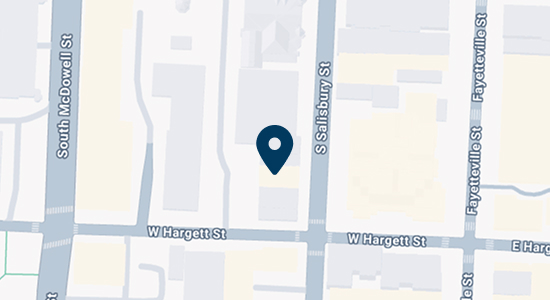
Raleigh, NC 27601
Contact Us
Call 919-915-0212 or use our online contact form to schedule a consultation.


