
Accidents, Wrongful Death, Sexual Abuse
Injury Lawyer & Arbitration Attorney
Injury Lawyer & Arbitration Attorney
Helping Clients in Raleigh and Throughout North Carolina

North Carolina arbitration services are available through attorney Chris Nichols for lawyers, insurers, claims professionals, and parties seeking a neutral to resolve civil disputes. Based in Raleigh, Chris regularly serves as an arbitrator and is available for matters throughout North Carolina on a case-by-case basis.
Chris has practiced civil litigation for more than three decades and has substantial courtroom and trial experience. He has handled personal injury claims, automobile insurance disputes, uninsured and underinsured motorist matters, insurance litigation, damages disputes, and other civil cases involving contested facts, medical evidence, causation, coverage, and valuation. He also represents survivors of sexual abuse in civil court proceedings, where the legal issues, burdens of proof, available remedies, and purpose of the case differ from criminal prosecutions and criminal charges.
That breadth of civil litigation experience informs Chris’s work as an arbitrator. Arbitration involves serving in a different role than client advocacy. When Chris serves as an arbitrator, he represents neither side. He acts as a neutral decision-maker, evaluates the evidence and legal arguments presented by the parties, applies the governing agreement and applicable law, and decides the matters submitted for arbitration. Lawyers may refer to that as an “arbitration neutral.”
For lawyers handling high-value, complex litigation who need a North Carolina arbitrator, Chris brings decades of civil litigation and trial experience, substantial work in insurance and personal injury law, published legal scholarship, continuing legal education, and leadership within the North Carolina legal profession. He previously served as a President of the North Carolina Advocates for Justice and is the author and editor of the North Carolina Personal Injury Liens Manual, published by LexisNexis. Contact Attorney Chris Nichols at Nichols Law Firm: 919-915-0212
| Issue | North Carolina Law |
|---|---|
| Agreement to Arbitrate | A written arbitration agreement is generally valid, enforceable, and irrevocable, subject to defenses that would permit revocation of a contract. N.C.G.S. § 1-569.6 |
| Who Decides Arbitrability? | The court decides whether an arbitration agreement exists and whether the dispute is subject to that agreement. The arbitrator decides certain conditions precedent to arbitrability. N.C.G.S. § 1-569.6 |
| Selecting the Arbitrator | The parties’ agreed method of appointment generally controls. If the method fails or no method exists, the court may appoint the arbitrator. N.C.G.S. § 1-569.11 |
| Neutrality and Disclosures | A prospective arbitrator must make a reasonable inquiry and disclose known facts that a reasonable person would consider likely to affect impartiality. The duty continues after appointment. N.C.G.S. § 1-569.12 |
| Hearings and Evidence | The arbitrator may conduct the proceeding for a fair and expeditious resolution. Parties may present material evidence and cross-examine witnesses. The Rules of Evidence generally do not apply, except as to privilege and immunities. N.C.G.S. § 1-569.15 |
| Right to Counsel | A party to an arbitration proceeding may be represented by an attorney or attorneys. N.C.G.S. § 1-569.16 |
| Discovery and Subpoenas | An arbitrator may issue subpoenas, permit depositions, authorize appropriate discovery, and enter protective orders concerning privileged or confidential information. N.C.G.S. § 1-569.17 |
| Arbitration Award | The award must be made in a record, authenticated by the arbitrator or arbitrators who concur, and provided to the parties. N.C.G.S. § 1-569.19 |
| Court Confirmation | A court generally must confirm an arbitration award unless the award is modified, corrected, or vacated under the statute. N.C.G.S. § 1-569.22 |
| Vacating an Award | Statutory grounds include corruption or fraud, evident partiality, prejudicial misconduct, refusal to consider material evidence, exceeding arbitral powers, lack of an arbitration agreement in specified circumstances, and prejudicial notice defects. N.C.G.S. § 1-569.23 |
Selecting an arbitrator is not simply a matter of finding a lawyer who understands courtroom procedure. Arbitration places a different responsibility on the lawyer serving as the “neutral.”
The arbitrator must understand the dispute, identify what has actually been submitted for decision, evaluate the evidence presented by both sides, apply the governing law and arbitration agreement, and render a decision without assuming the role of advocate.
Chris Nichols regularly serves as an arbitrator in North Carolina civil disputes. His background is particularly relevant to matters involving automobile claims, personal injury damages, uninsured and underinsured motorist coverage, insurance issues, and other civil disputes in which trial experience and familiarity with insurance litigation may assist the arbitration process.
Not every dispute will be appropriate for every arbitrator. Chris therefore considers potential appointments individually based on the nature of the case, the issues presented, scheduling, conflicts, location, anticipated hearing requirements, and whether his professional background is well-suited to the dispute.
Arbitration and mediation are both forms of alternative dispute resolution, but they serve very different purposes.
A mediator ordinarily helps the parties negotiate. Unless the parties reach an agreement, the mediator ordinarily does not decide who should prevail.
An arbitrator acts more like a private adjudicator. The arbitrator receives the evidence and arguments permitted by the governing agreement and procedure, resolves the matters submitted for decision, and issues an arbitration award.
| Mediation | Arbitration |
|---|---|
| Facilitates negotiations | Decides submitted disputes |
| Parties decide whether to settle | Arbitrator renders an award |
| Ordinarily requires agreement to resolve the case | May result in a binding decision depending upon the governing agreement and law |
| Focuses on negotiated resolution | Focuses on adjudication of the issues submitted |
North Carolina’s Revised Uniform Arbitration Act, N.C.G.S. §§ 1-569.1 through 1-569.31, supplies the state-law framework for many arbitration proceedings. The Act defines an arbitrator as someone appointed to render an award, alone or with others, in a dispute subject to an agreement to arbitrate.
The governing rules in a particular matter can depend upon the arbitration agreement, applicable insurance policy, applicable arbitration rules, state law, federal law, and the issues the parties have agreed to submit. Arbitration should therefore not be treated as a single standardized procedure that operates identically in every case.
Under the North Carolina Revised Uniform Arbitration Act, an arbitrator may conduct proceedings in a manner considered appropriate for a fair and expeditious resolution, subject to the governing agreement and law. The statute also addresses hearings, evidence, subpoenas, discovery, awards, confirmation of awards, and circumstances in which an award may be challenged.
Uninsured motorist and underinsured motorist disputes are common in North Carolina arbitration practice.
UM generally refers to uninsured motorist coverage. UIM generally refers to underinsured motorist coverage. Insurance coverage issue can become significant when an injured claimant seeks recovery involving a driver who has no applicable liability insurance or whose available liability coverage is insufficient in relation to the damages claimed.
The governing insurance policy and North Carolina insurance law must be carefully examined to determine the rights and procedures applicable to a particular UM or UIM matter.
Chris Nichols has dealt with arbitration issues involving automobile insurance for decades. His published work includes The Fight to Get Arbitration in an Automobile Case, and What to Do When You Get There, and his legal education work has included instruction concerning strategies for arbitrating UM/UIM cases.
That history provides useful context when counsel are evaluating a neutral for an automobile insurance arbitration. Issues involving medical evidence, causation, damages, insurance coverage, policy language, prior payments, competing interpretations of the evidence, and the practical presentation of an injury case may all require careful consideration.
Chris’s role as an arbitrator is nevertheless distinct from his work representing injured clients. Once selected to serve as a neutral, his responsibility is to the arbitration process and the matters submitted for decision, not to either side of the dispute.
A civil arbitration may involve considerably more than reviewing documents and assigning a number to a claim.
Lawyers often face complex litigation disputes involving causation, medical evidence, future damages, lost earnings, competing expert opinions, credibility, insurance provisions, evidentiary disputes, legal standards, and the proper measure of damages. The significance of any particular issue depends upon the case.
A lawyer who has spent decades preparing and trying civil cases has seen how evidence develops from initial investigation through discovery, deposition testimony, expert review, pretrial motions, negotiation, and trial.
That background can be useful in arbitration because the neutral must evaluate not merely what evidence exists, but what the evidence establishes within the framework of the dispute submitted by the parties.
Chris has practiced law in North Carolina since 1994. His professional work includes personal injury litigation, insurance matters, and a civil trial practice involving helping victims of sexual abuse. He has also written and taught extensively on subjects affecting North Carolina civil litigation.
That experience is part of a broader professional history involving trial advocacy, insurance law, liens, damages, civil procedure, and the practical handling of injury claims.
Although Chris Nichols is based in Raleigh, his North Carolina arbitration services are not necessarily limited to Wake County or the Triangle.
Chris is available to consider arbitration appointments throughout North Carolina on a case-by-case basis.
That may include matters arising in Raleigh, Durham, Chapel Hill, Charlotte, Greensboro, Winston-Salem, Fayetteville, Wilmington, Asheville, eastern North Carolina, western North Carolina, and other communities throughout the state when the nature of the dispute, scheduling, location and other considerations make the engagement appropriate.
Statewide availability does not mean that every proposed matter can or will be accepted. An arbitration engagement remains subject to conflicts review, availability, the issues presented, the governing arbitration agreement, the expectations of counsel and the parties, and whether Chris’s background is suited to the dispute.
Counsel considering Chris for an appointment may contact Nichols Law Firm to discuss availability and the administrative requirements for a proposed arbitration.
Neutrality and serving as a “neutral” are more than marketing descriptions. North Carolina arbitration law specifically addresses relationships and interests that may affect an arbitrator’s impartiality.
N.C.G.S. § 1-569.12 requires a prospective arbitrator, after reasonable inquiry, to disclose known facts that a reasonable person would consider likely to affect impartiality. Those disclosures may include financial or personal interests and existing or prior relationships involving parties, counsel, representatives, witnesses, or other arbitrators.
The disclosure obligation continues after the appointment if relevant information later becomes known.
That statutory framework is one reason counsel should begin the appointment process with a meaningful conflicts review.
Before sending extensive confidential material concerning the merits of a dispute, counsel considering Chris as an arbitrator would necessarily provide sufficient identifying information for a conflicts check. That may include the names of the parties, attorneys, insurers, significant witnesses, related corporate entities, and other participants whose involvement may present a potential conflict or disclosure issue.
Once conflicts have been addressed, the parties can determine what additional information is appropriate for consideration of the proposed engagement.
Personal injury disputes can present factual questions that do not lend themselves to simplistic formulas.
Medical expenses may be part of a damages presentation, but the analysis can extend to causation, the nature and duration of an injury, future treatment, impairment, lost income, diminished earning capacity, pain and suffering, permanent injury, competing medical opinions, prior conditions, and other evidence permitted by the governing law and arbitration procedure.
An arbitrator handling such a matter must listen to both sides.
A claimant may contend that an injury materially changed the claimant’s health, work, activities, and future. The responding party may contest causation, the extent of the injury, the necessity or relationship of treatment, the claimed economic loss, or the amount of damages.
The arbitrator’s responsibility is not to begin with an assumption about either position. It is to evaluate the properly presented evidence and decide the issues the parties have placed before the neutral.
Chris’s decades of civil litigation experience provide a substantial foundation for understanding how North Carolina injury claims are investigated, developed, defended, presented, and valued. His experience with insurance law also provides context for disputes in which the underlying injury claim and insurance issues interact.
Chris Nichols has not limited his professional work to representing clients.
He has spent years writing and teaching other North Carolina lawyers about civil litigation, insurance, liens, trial practice and arbitration.
Chris is the editor and author of the North Carolina Personal Injury Liens Manual, published by LexisNexis. The publication addresses the complicated statutory, contractual, and reimbursement issues that can affect the distribution of personal injury recoveries.
His other published work has specifically addressed arbitration, including automobile arbitration. He has also contributed to North Carolina personal injury practice materials addressing arbitration and has taught lawyers about UM/UIM arbitration strategy.
That work does not determine how Chris will decide any arbitration. It does demonstrate the depth of professional attention he has devoted to the legal subjects that can appear in civil and insurance disputes.
Chris Nichols is a former President of the North Carolina Advocates for Justice, serving as president during the 2015–2016 term.
He has also served in leadership roles within the North Carolina legal profession, including service as Chair of the North Carolina Bar Association Litigation Section.
Professional leadership is not a substitute for neutrality, preparation, judgment, or knowledge of the case being arbitrated. It does, however, provide additional context for lawyers evaluating a proposed neutral.
Serving in leadership positions, writing for lawyers, teaching continuing legal education programs, and participating in the development of North Carolina trial practice expose a lawyer to competing legal arguments and perspectives well beyond the confines of any single case.
Chris Nichols continues to represent plaintiffs in his law practice. That should not be confused with his role when he accepts an appointment as an arbitrator.
The functions are separate.
As counsel, a lawyer owes professional duties to the client and advocates the client’s position within the law.
As a neutral arbitrator, the lawyer does not represent either party. The arbitrator instead receives the parties’ respective positions and evidence and decides the matters submitted under the governing arbitration agreement, law, and procedure.
Lawyers considering an arbitrator are entitled to evaluate professional background, litigation history, subject-matter familiarity, potential conflicts, prior relationships, and any other consideration relevant to the selection process.
The appropriate inquiry is not whether the arbitrator has practiced law. An experienced arbitrator almost certainly has professional experience and perspectives developed over time. The question is whether the arbitrator can set aside advocacy, disclose matters that should be disclosed, provide both sides with an appropriate opportunity to be heard, and decide the submitted dispute as a neutral.
There is no single set of procedures that applies identically to every arbitration.
The arbitration agreement may define the matters submitted, how the arbitrator will be selected, where the proceeding will occur, which procedural rules apply, what discovery is permitted, how evidence will be presented, and what type of award is required.
North Carolina’s Revised Uniform Arbitration Act also supplies procedural rules for matters governed by the Act.
For example, the Arbitration Process set forth in N.C.G.S. § 1-569.15 authorizes an arbitrator to conduct an arbitration in a manner considered appropriate for a fair and expeditious disposition. The statute gives parties the opportunity to be heard, present material evidence, and cross-examine witnesses appearing at a hearing.
N.C.G.S. § 1-569.17 addresses subpoenas, depositions, and discovery. The statute permits an arbitrator to authorize discovery appropriate to the circumstances, taking into account fairness, efficiency, and cost.
Chapter 8C of the Evidence Code and the North Carolina Rules of Evidence generally do not apply to an arbitration proceeding governed by the Act, subject to statutory protections involving privilege and immunity.
Those provisions illustrate why arbitration should not be treated simply as a shortened courtroom trial. The governing agreement and applicable law define the process.
Lawyers interested in selecting Chris Nichols as an arbitrator may contact Nichols Law Firm regarding a proposed appointment.
An initial inquiry should identify the parties and counsel so that potential conflicts and disclosure issues can be addressed before substantive confidential information is provided.
After a conflicts review, counsel can provide information concerning the general nature of the dispute, proposed arbitration structure, anticipated hearing length, requested dates, location, applicable arbitration agreement or rules, and whether Chris is being considered as the sole arbitrator or as a member of an arbitration panel.
Acceptance of any arbitration appointment is subject to conflicts review, availability, agreement of the parties where required, the nature of the dispute, and the terms of the engagement.
Chris is based in Raleigh and considers arbitration matters throughout North Carolina on a case-by-case basis.
Arbitration may be binding, depending on the governing arbitration agreement, applicable law, and nature of the proceeding. Counsel should review the agreement and governing legal framework rather than assume that every proceeding described as arbitration has identical consequences.
The arbitration agreement may establish the method of selection. Under N.C.G.S. § 1-569.11, an agreed method for appointing an arbitrator generally must be followed. The statute also provides a mechanism for court appointment in certain circumstances when there is no agreed method or the agreed method fails.
N.C.G.S. § 1-569.16 provides that a party to an arbitration proceeding governed by the North Carolina Revised Uniform Arbitration Act may be represented by an attorney or attorneys.
North Carolina law imposes disclosure requirements on arbitrators governed by the Revised Uniform Arbitration Act. N.C.G.S. § 1-569.12 requires reasonable inquiry and disclosure of known facts that a reasonable person would consider likely to affect impartiality. The obligation continues if relevant information is learned after the appointment.
Attorneys, insurers, parties, and claims professionals considering Christopher R. Nichols for service as an arbitrator may contact Nichols Law Firm in Raleigh regarding availability.
Chris considers civil arbitration matters throughout North Carolina on a case-by-case basis. Prospective appointments remain subject to conflicts review, scheduling, the nature of the dispute, and agreement concerning the terms of the arbitration engagement.
For an initial conflicts inquiry, contact Nichols Law Firm at 919-915-0212 or through the firm’s online contact form.
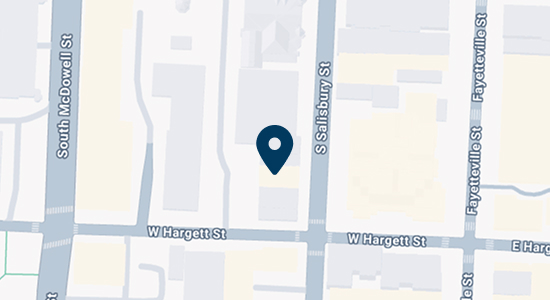
Raleigh, NC 27601
Call 919-915-0212 or use our online contact form to schedule a consultation.


